Where to Stay in Kyoto: Which Area Fits Your Trip
Stay near Kyoto Station if you are arriving on the Haruka train from Kansai Airport or the Shinkansen from Tokyo, carrying big bags, or planning day trips. Pick Downtown (Kawaramachi and Shijo) for a first visit if you want restaurants, shopping and three rail companies within walking distance. Choose Gion and Higashiyama if walking the old lanes toward Kiyomizu-dera in the early morning and evening is the reason you came. Karasuma and Nijo is the quieter business district on top of the subway, with many chain hotels. Arashiyama is worth one night at the end of a trip, so you can see the river after the day visitors leave.
Kyoto's subway has only two lines. The Karasuma Line runs north to south from Kyoto Station, and the Tozai Line runs east to west; they cross at Karasuma Oike. Private railways fill the gaps: Hankyu runs to Kawaramachi and on to Arashiyama, Keihan stops at Gion-Shijo and Fushimi Inari, and JR's Sagano Line reaches Arashiyama. Many temples are bus trips, and buses are the slowest part of a Kyoto day, so pick a hotel by its station. Below are five areas with three real hotels each. We do not list room rates because they change by date.
We earn a commission if you book through links on this page, at no extra cost to you. It does not change what we recommend.
Checked against official transport and hotel sites: October 2026. Prices change daily, so the buttons open live rates.
Areas at a glance
| Area | Best for | Subway | From the airport |
|---|---|---|---|
| Kyoto Station | Rail arrivals, short stays, day trips, heavy luggage | Karasuma Line Kyoto; JR lines; city bus terminal | JR Haruka direct to Kyoto Station, about 75 minutes |
| Downtown (Kawaramachi and Shijo) | First-timers, food, shopping, evenings out | Hankyu Kyoto-Kawaramachi; Tozai Line Kyoto Shiyakusho-mae; Keihan Sanjo | Haruka to Kyoto Station, then Karasuma Line to Shijo (4 minutes) or a taxi |
| Gion and Higashiyama | Temples, old lanes, early starts | Keihan Gion-Shijo; Tozai Line Higashiyama | Haruka to Kyoto Station, then city bus 206 or 100 to Kiyomizu-michi (about 15 minutes) or a taxi |
| Karasuma and Nijo | Calmer nights, both subway lines, Nijo Castle | Karasuma Line Shijo and Karasuma Oike; Tozai Line Nijojo-mae; Hankyu Karasuma | Haruka to Kyoto Station, then Karasuma Line north, 2 stops to Shijo |
| Arashiyama | One night by the river, ryokan stays | JR Saga-Arashiyama; Randen Arashiyama; Hankyu Arashiyama | Haruka to Kyoto Station, then JR Sagano Line to Saga-Arashiyama (about 11 minutes by rapid) |
Kyoto Station
Kyoto Station is where the Haruka from Kansai Airport and the Tokaido Shinkansen from Tokyo both stop, and the city bus terminal sits in front of the Karasuma Central Exit. The subway Karasuma Line starts here too, about 4 minutes from Shijo, the downtown stop. Kyoto City's official guide puts Fushimi Inari Taisha about 9 minutes away on the JR Nara Line, and Saga-Arashiyama about 11 minutes away on a rapid train on the JR Sagano Line.
The trade-off is atmosphere. The blocks around the station are malls, offices and hotels, and Gion or Kiyomizu-dera means a bus or taxi. On weekends and holidays, Kyoto City runs express buses EX100 and EX101 from stop D1 toward Kiyomizu-dera with fewer stops.
Airport limousine buses arrive on the south (Hachijo) side. For an early train or late flight, no area saves more time.
- Direct Haruka and Shinkansen, no transfer
- Subway, JR lines and the bus terminal in one place
- Short rides to Fushimi Inari and Arashiyama
- Few traditional streets nearby
- Bus or taxi needed for Gion and Kiyomizu-dera
- Station concourses are packed at peak times
Hotel Granvia Kyoto
Kyoto Station (inside the station building, Central Exit)
The hotel is part of the station building itself, so you can walk from the Haruka or Shinkansen to the lobby without going outside.
Hotel Keihan Kyoto Grande
Kyoto Station, south (Hachijo) side, about 1 minute on foot
A hotel a minute from the station on the south side, close to where the airport limousine buses stop.
K's House Kyoto
Keihan Shichijo, about 4 minutes on foot; JR Kyoto Station about 9 minutes
A hostel with dormitories and private twin, double and Japanese-style rooms, between the station and the Kamo River.
Downtown (Kawaramachi and Shijo)
Downtown Kyoto is the grid of streets between Karasuma Street and the Kamo River, centered on the Shijo and Kawaramachi crossing. This is where Nishiki Market, the department stores and most late restaurants are. Three rail companies meet here: the Hankyu Kyoto Line ends at Kyoto-Kawaramachi, Keihan's Gion-Shijo Station is just across the Shijo bridge, and the Tozai subway line stops at Kyoto Shiyakusho-mae and Sanjo Keihan on the north side.
That makes day trips simple: Hankyu reaches Arashiyama with a change at Katsura. For Fushimi Inari, the same guide gives about 22 minutes on the Keihan Line from Gion-Shijo to Fushimi-Inari Station, then about 5 minutes on foot. Gion itself is a walk across the river.
The downside: Downtown is not on a JR line, so from the Haruka you change to the subway or take a taxi.
- Restaurants and shopping on your doorstep
- Hankyu, Keihan and the Tozai Line all within walking distance
- Gion is a walk across the river
- No JR station, so one transfer from the airport
- Busy and loud on weekends
- Sidewalks around Shijo are crowded in the daytime
Hotel Okura Kyoto
Kyoto Shiyakusho-mae (Tozai Line), directly connected
A full-service hotel at Kawaramachi-Oike with a direct underground link to the Tozai Line.
The Royal Park Hotel Kyoto Sanjo
Sanjo (Keihan) or Kyoto Shiyakusho-mae (Tozai Line), about 3 minutes on foot each
A business-style hotel on Sanjo Street, three minutes from two different lines.
Piece Hostel Sanjo
Karasuma Oike (Karasuma and Tozai lines), about 10 minutes on foot
A hostel with dormitories, including female-only rooms, and private rooms near Nishiki Market.
Gion and Higashiyama
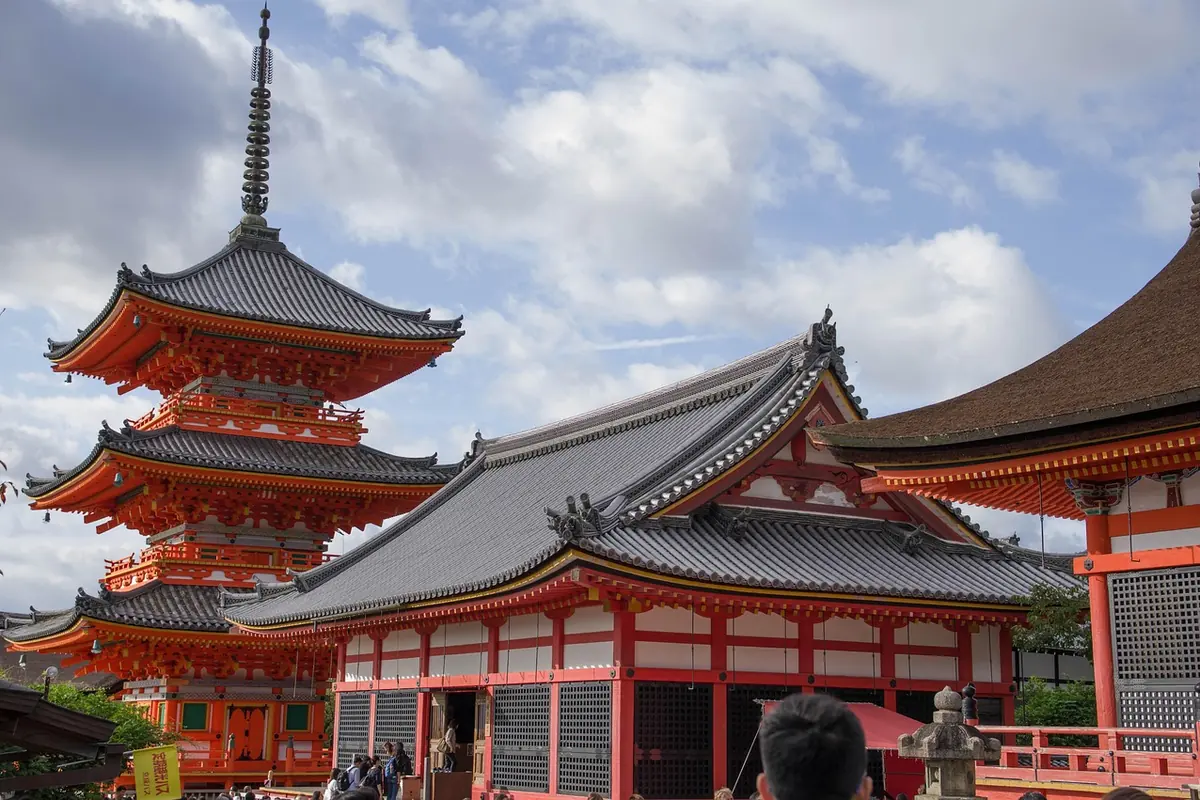
East of the Kamo River are the Kyoto scenes most people come for: the teahouse streets of Gion, Yasaka Shrine, and the sloping lanes that climb to Kiyomizu-dera. Keihan's Gion-Shijo Station is the nearest rail stop for Gion, and the Tozai Line's Higashiyama Station serves the area to the north. The southern lanes near Kiyomizu-dera have no station close by. From Kyoto Station, city bus 206 or 100 reaches Kiyomizu-michi in about 15 minutes.
The reason to stay here is timing: you can walk the lanes at quiet hours and rest at midday without a bus ride.
The lanes are hilly and paved in stone, hard work with a suitcase. Budget beds are scarce here; budget travelers do better Downtown, across the river.
- Walk to Gion, Yasaka Shrine and Kiyomizu-dera
- Quiet early mornings and evenings in the lanes
- Ryokan and boutique hotels in traditional settings
- Hills and stone paving with luggage
- Crowded buses toward Kiyomizu-dera
- Few budget options
Park Hyatt Kyoto
Gion-Shijo (Keihan), about 1.3 km
Built next to Kodai-ji Temple and facing the Ninenzaka lane that leads up to Kiyomizu-dera.
Hotel The Celestine Kyoto Gion
Gion-Shijo (Keihan) Exit 1, about 10 minutes on foot
Close to Yasaka Shrine, with a free shuttle bus to Kyoto Station.
Gion Hatanaka
Gion-Shijo (Keihan)
A ryokan (a traditional inn) in Gion with tatami rooms, futon bedding and Kyoto kaiseki dinners.
Karasuma and Nijo
Karasuma Street is Kyoto's business spine, with the Karasuma subway line underneath. Shijo Station connects to Hankyu's Karasuma Station, and Karasuma Oike is where the Karasuma and Tozai lines cross. One stop west on the Tozai Line, Nijojo-mae Station is the closest stop for Nijo Castle, and the Karasuma Line runs north to Marutamachi and Imadegawa for the Kyoto Imperial Palace.
It suits travelers who want both subway lines and quieter nights than Kawaramachi, and many chain hotels sit near Shijo Station. The streets are offices and apartments, and east side sights still mean a bus or a train change.
- Both subway lines within a short walk
- Quieter at night than Kawaramachi
- Plenty of chain hotels at every tier
- Plain office streets
- Bus or transfer for the east side temples
- Fewer late restaurants than Downtown
HOTEL THE MITSUI KYOTO
Nijojo-mae (Tozai Line) Exit 2, about 3 minutes on foot
A luxury hotel next to Nijo Castle with a hot spring spa.
Mitsui Garden Hotel Kyoto Shijo
Shijo (Karasuma Line) Exit 2, about 6 minutes on foot
A chain hotel on Nishinotoin Street, also 6 minutes from Hankyu Karasuma Station.
Sotetsu Fresa Inn Kyoto-Shijokarasuma
Shijo (Karasuma Line) Exit 4, about 2 minutes on foot
Compact rooms two minutes from the subway and Hankyu; note that the hotel accepts cashless payment only.
Arashiyama (one night)
Arashiyama sits on the western edge of the city, around the Togetsukyo Bridge, the bamboo grove and Tenryu-ji Temple. It has three separate stations. JR Saga-Arashiyama is about 11 minutes from Kyoto Station by rapid train on the Sagano Line, according to Kyoto City. The Randen tram's Arashiyama Station is in the middle of the district, and Hankyu Arashiyama Station is south of the river, reached from Downtown with a change at Katsura.
Kyoto City warns that both the Sagano Line and the buses from Kyoto Station get crowded. Staying one night lets you skip the worst of that and see the river in the evening and early morning.
Gion and Fushimi Inari are on the far side of the city, so one night, often the last, is enough.
- River and bamboo grove at quiet hours
- Ryokan and onsen stays
- JR, Randen and Hankyu all serve the area
- Far from Gion and Fushimi Inari
- Crowded trains and buses at midday
- Fewer hotels, and most are upscale
HOSHINOYA Kyoto
Arashiyama; guests ride a private boat from near Togetsukyo Bridge
A ryokan where every room faces the river, reached by the hotel's own boat.
Suiran, a Luxury Collection Hotel, Kyoto
Randen Arashiyama, a short walk
A 39-room hotel on the Hozu River in which 17 rooms have their own hot spring bath.
Hotel Binario Saga Arashiyama
JR Saga-Arashiyama, about 1 minute on foot
A small hotel beside the JR station, so you can arrive with luggage straight from Kyoto Station.
Getting from Kansai Airport and Tokyo
From Kansai Airport
The JR Haruka limited express runs from Kansai Airport Station directly to Kyoto Station. Kansai Airport and Kyoto City's official guide both give about 75 minutes; some hotels quote up to 85 minutes depending on the train. Kyoto City says the trains run every half hour in the morning and evening and every hour in the middle of the day. JR West sells a discounted one-way Haruka ticket to visitors with a foreign passport who enter Japan as a Temporary Visitor.
Airport limousine buses also run to Kyoto Station's Hachijo side. Kyoto City estimates about 120 minutes, and road traffic decides the real time, so the train is the safer choice if you have a fixed check-in or dinner booking.
From Tokyo
The Tokaido Shinkansen runs from Tokyo and Shinagawa stations to Kyoto Station. The fastest Nozomi trains take about 2 hours 10 to 20 minutes: JR Central advertises 130 minutes and Kyoto City says about 135. The Japan Rail Pass does not cover the Nozomi on its own; the official pass site sells a separate ticket for it. Slower Hikari trains are covered by the pass.
How to choose: quick rules
- Two nights or less, or arriving late: Kyoto Station.
- First trip, three or more nights: Downtown, or Karasuma near Shijo Station if you want quieter nights.
- Temples and old streets are the priority: Gion and Higashiyama, and pack light.
- Day trips to Nara, Osaka or Fushimi Inari: Kyoto Station for JR, Downtown for Keihan and Hankyu.
- A ryokan night: Gion or Arashiyama, booked as one special night inside a longer stay.
- Traveling with kids or a stroller: Kyoto Station or Karasuma, where the subway and flat streets save effort.
Want to compare everything in Kyoto at once?
Frequently asked questions
Which area is best for a first trip to Kyoto?
Downtown (Kawaramachi and Shijo) for stays of three nights or more: it has the most restaurants and three rail lines on foot. For a short stay or a late arrival, Kyoto Station is easier.
How do I avoid crowded buses in Kyoto?
Use trains for the long legs and buses only for the last stretch, as Kyoto City recommends. The bus-only 1-day pass ended on September 30, 2023; the Subway and Bus 1-day Pass remains. On weekends and holidays, express buses EX100 and EX101 run from Kyoto Station toward Kiyomizu-dera with fewer stops (500 yen for adults at launch in June 2024). For Arashiyama, take the train; Kyoto City calls bus 11 from Shijo Kawaramachi constantly congested.
Is it worth staying a night in Arashiyama?
Yes, for one night. Staying lets you see the river and bamboo grove in the evening and early morning, when day visitors are gone. It is far from Gion and Fushimi Inari, so base the rest of the trip in the center.
What are the basic manners at a ryokan?
Take your shoes off at the entrance and use the indoor slippers provided, but take the slippers off before stepping onto tatami. Use the separate toilet slippers only in the toilet. Do not drag suitcases across tatami, which damages the mats. In the shared baths, wash your body with soap before getting into the water; single-sex baths are entered without clothing. Many ryokan let you walk around the building in the yukata (cotton robe) they provide, but ask before wearing it outside.
Can I use the Japan Rail Pass from Tokyo to Kyoto?
Yes on Hikari trains. The pass alone does not cover the faster Nozomi; the official pass site sells a special ticket for Nozomi and Mizuho trains.
Can I send my luggage from Kyoto Station to my hotel?
Yes. Kyoto City's Hands Free Kyoto site lists same-day delivery from Kyoto Station to accommodation if you complete the procedure before 2 pm. Not every hotel accepts deliveries, so confirm with yours before you arrive.
Official sources
- JR West: HARUKA One-way Ticket Information
- Kansai Airport: Transfer to Osaka, Kyoto or Nara via Haruka
- Kyoto City Official Travel Guide: From Kansai Airport to Kyoto
- Kyoto City Official Travel Guide: Limited express buses (EX100, EX101)
- Kyoto City Official Travel Guide: Access to Saga-Arashiyama
- Kyoto City Official Travel Guide: Access to Fushimi Inari Taisha
- Kyoto City Official Travel Guide: Autumn sightseeing notes (bus pass change)
- Kyoto City Bus and Subway Information Guide
- JR Central: Tokaido Shinkansen
- Japan Rail Pass official site
- Hands Free Kyoto (Kyoto City)
- Japan National Tourism Organization: Japanese manners and etiquette
- Aichi Now (Aichi Prefecture): Etiquette for a ryokan stay
- HOSHINOYA Kyoto: Access
- HOTEL THE MITSUI KYOTO: Access
- Hotel The Celestine Kyoto Gion: Access
- Mitsui Garden Hotel Kyoto Shijo: Access
 Where to Stay in TokyoSix neighborhoods compared by train line
 Where to Stay in OsakaNamba vs Umeda and the rest, with hotels
 JR Pass CalculatorIs the 7, 14 or 21-day pass worth it for your route?