Kakao T Taxi for Foreigners: How to Get a Cab in Korea
Kakao T is Korea's main taxi app, but it is built around a Kakao account, so most visitors are better off with k.ride, Kakao Mobility's foreigner version that lets you sign up with Google, Apple or your phone number and pay with an overseas credit card. Both apps call the same kinds of taxis, and if apps fail, you can still hail a cab on the street and pay by card, cash or T-money.
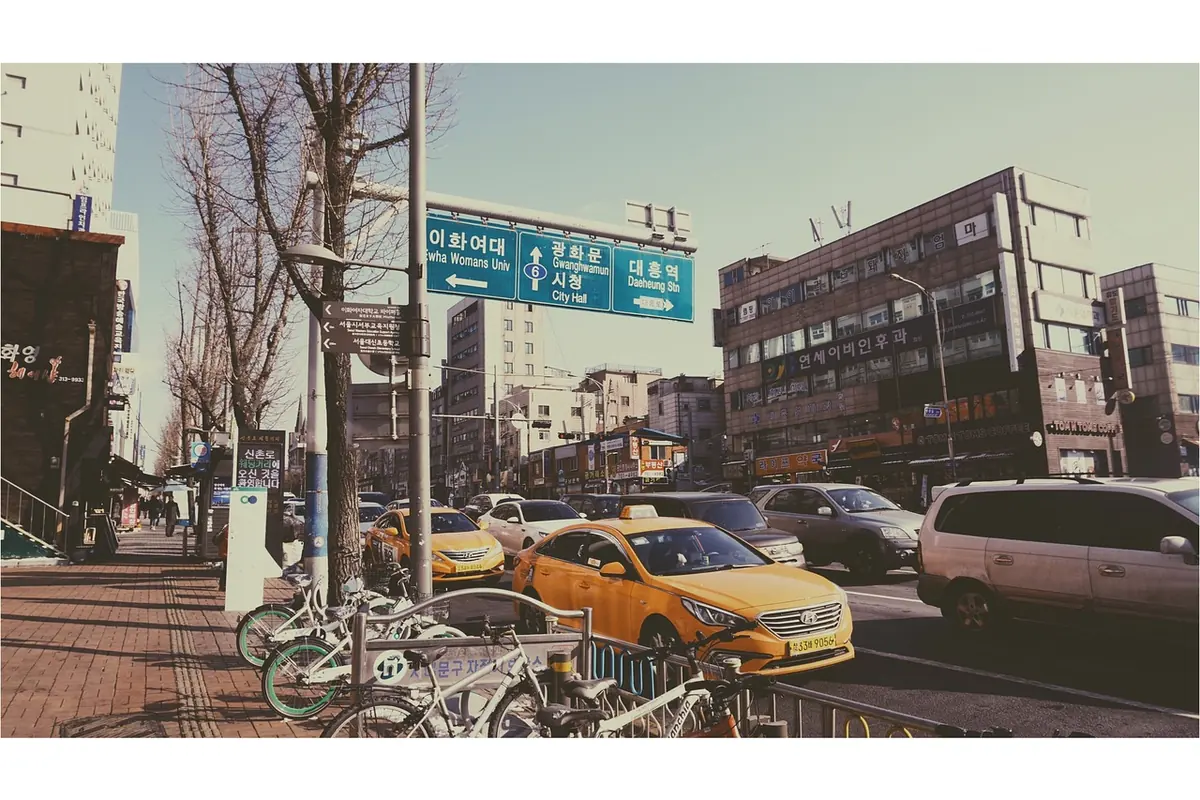
Below: which app to install, how a ride actually goes, what Seoul taxis cost as of October 2026, and how to show a driver where you're going.
Checked against official sources: October 2026
Kakao T or k.ride: which one to install
Kakao Mobility runs two apps that hail Korean taxis:
- Kakao T is the app most Koreans use. VisitKorea notes that it requires a Kakao account created through KakaoTalk. The app is available in Korean, English and Japanese, but its sign-up and card registration are designed around Korean users.
- k.ride is what VisitKorea calls a foreigner-exclusive version of Kakao T, launched in 2024. It doesn't require a KakaoTalk sign-up. You can log in with a Google or Apple account or verify a phone number or email, and register your own overseas credit card for payment.
Kakao Mobility doesn't clearly publish whether a non-Korean phone number and card will get you all the way through the Korean Kakao T app, so for a short trip, k.ride is the safer choice. Install it and register your card at home, while you still have Wi-Fi and your home SIM for verification texts.
k.ride's app store listing says the app runs in English, Japanese, and Simplified and Traditional Chinese, and offers 133 languages for destination search and chat with the driver. It also supports Alipay+ wallets and WeChat Pay, besides credit and debit cards.
Taxi types you'll see in the app
Names differ slightly between the two apps:
| k.ride option | How k.ride describes it | Kakao T equivalent |
|---|---|---|
| Standard | Reasonable price | Regular / Blue |
| Comfort | Extra space minivan | Venti |
| Deluxe | With experienced driver | Deluxe |
| Luxury | Luxury sedan for VIP | Black |
VisitKorea describes Venti as a minivan for groups of four or more, and Black as the luxury option. Seoul's taxi guide recommends an SUV or van when you have a lot of luggage or a group of five or more. If you're hauling two big suitcases from Seoul Station, pick the minivan option instead of hoping a sedan trunk will fit them.
Base fares differ by type. The apps show an estimated fare before you call, and VisitKorea notes that a small call fee may be added on top of the metered fare for app calls.
How a ride goes, step by step
- Set your pickup point. The app uses your location. Move the pin to a spot a car can actually stop at, such as a main road instead of a pedestrian alley.
- Enter the destination. Search in English, or paste the Korean address. Korean addresses or place names give the most accurate match.
- Check the estimate and choose a taxi type.
- Wait for a match. The app shows the car's license plate number and model. Match the plate before getting in.
- Ride. If you need to say something, use the in-app chat with translation instead of shouting directions.
- Pay. With auto-payment, the fare is charged to your registered card when the trip ends. Seoul's taxi guide warns that if you pay in advance by app, don't pay the driver again.
Note the plate number from the app either way. Seoul's 120 Dasan Call Center (02-120, English option) needs the full plate number to help with complaints or lost items.
Seoul taxi fares and late-night surcharges
The Seoul Metropolitan Government's official fare table (in effect since February 1, 2023, current as of October 2026) for a regular sedan taxi:
| Time | Base fare | Then |
|---|---|---|
| Daytime | 4,800 won (first 1.6 km) | 100 won per 131 m or per 30 seconds |
| 10 p.m. to 11 p.m. | 5,800 won | 120 won per 131 m or per 30 seconds |
| 11 p.m. to 2 a.m. | 6,700 won | 140 won per 131 m or per 30 seconds |
| 2 a.m. to 4 a.m. | 5,800 won | 120 won per 131 m or per 30 seconds |
That works out to a late-night surcharge of 20% from 10 to 11 p.m., 40% from 11 p.m. to 2 a.m., and 20% from 2 to 4 a.m. Trips that leave the city limits add a 20% surcharge, and late-night rides outside the city can reach 60% in total.
Deluxe, SUV and van taxis start at 7,000 won for the first 3 km in the daytime (8,400 won at night), with a 20% late-night surcharge from 10 p.m. to 4 a.m. International taxis with multilingual drivers add 20% to metered fares and use fixed zone fares for airport runs.
Other cities set their own fares, so check the app estimate outside Seoul.
Paying the fare
In an app with a registered card, the fare is charged automatically. For a street taxi, or if auto-pay isn't set up, VisitKorea and Seoul city list three ways to pay the driver:
- Credit card, tapped or inserted at the terminal by the meter.
- Transit card such as T-money. Make sure the balance covers the fare.
- Cash in won.
If the terminal won't read your foreign card, offer a second card or pay in cash. Keeping a few 10,000 won bills in your wallet for exactly this moment saves an awkward wait at the curb.
No tip. VisitKorea says taxis charge by the meter and don't require tips. Letting the driver keep small change is a kind gesture, not an expectation.
Get a receipt if you might need to report a problem. It shows the vehicle number and the fare.
Alternatives to Kakao: other apps and the street
Hailing on the street still works well in Seoul. VisitKorea says regular taxis have yellow license plates and a TAXI sign on the roof. Taxi stands sit at bus terminals, major subway stations and large malls, and Seoul visitors can call 02-120 for stand locations.
Other apps VisitKorea and Seoul city list for foreigners:
- UT (Uber + TMAP): Seoul city's taxi page lists it as needing no Korean phone number or credit card.
- TADA: accepts an international mobile number for sign-up and a credit card for payment.
- TABA: foreigner-focused, sign-up by mobile number or Google or Apple ID, card auto-payment.
- International taxi: multilingual drivers, bookable in advance or at the Incheon airport desk.
The 1330 Korea Travel Hotline (+82-2-1330) runs 24/7 in several languages and can help when a driver and you can't understand each other.
Showing your destination in Korean
Most taxi drivers in Korea speak little English, and Korean place names spelled in English can be ambiguous. These habits save the most trouble:
- Save the Korean address. Copy your hotel's Korean address from your booking confirmation into your phone notes, and screenshot it in case your data drops.
- Use the app destination when possible. When the destination is set in the app, the driver's screen already shows it, and nothing needs saying.
- For street taxis, show the screen. Hold up the Korean address or the name of a nearby landmark, subway station or big building. Drivers navigate by landmarks well.
- Keep mobile data on. Ride apps need a live connection for matching, driver chat and auto-payment. Sort out a SIM, eSIM or roaming plan before you count on an app. If you only have hotel or airport Wi-Fi, a taxi stand or street taxi is your fallback.
- Learn two words. yeogiyo ('here, please') to stop, and yeongsujeung juseyo ('receipt, please').
Late at night in busy districts, app calls can be slow to match. Walk a block or two off the main nightlife street before calling, and set a pickup spot where a car can pull over easily.
Frequently asked questions
Can foreigners use Kakao T in Korea?
Kakao T needs a Kakao account made through KakaoTalk, which is built around Korean users. Kakao Mobility's foreigner app, k.ride, lets you sign up with Google, Apple, a phone number or email and pay with an overseas card, so most visitors use that.
Can I pay for a Kakao taxi with a foreign credit card?
In k.ride, yes: VisitKorea says you can register an overseas credit card, and the app also supports Alipay+ and WeChat Pay. In any taxi you can also pay the driver directly by card, T-money or cash.
How much is a taxi in Seoul?
A regular sedan starts at 4,800 won for the first 1.6 km in the daytime, then 100 won per 131 m or per 30 seconds, per Seoul city's fare table as of October 2026. Deluxe taxis start at 7,000 won.
What time does the late-night taxi surcharge start in Seoul?
At 10 p.m. Regular taxis charge 20% extra from 10 to 11 p.m., 40% from 11 p.m. to 2 a.m., and 20% from 2 to 4 a.m., according to the Seoul Metropolitan Government.
Do I tip taxi drivers in Korea?
No. Taxis charge by the meter and drivers don't expect tips. Letting them keep small change is optional and appreciated.
Official sources
- VisitKorea (Korea Tourism Organization) - Ride-hailing Apps in Korea
- VisitKorea - Taxi
- k.ride official site (Kakao Mobility)
- k.ride on Google Play (Kakao Mobility)
- Kakao T on Google Play (Kakao Mobility)
- Seoul Metropolitan Government - Modes of Transport (fare tables)
- Seoul Metropolitan Government - Taxi
More Korea guides
 K-ETA & e-Arrival CardEntry rules, exemption ending, how to apply
 T-money CardBuy, recharge, refund, where it works
 Paying in KoreaCards, cash, ATMs, exchange, no tipping
 eSIM & SIM in KoreaData options and what you need
 Naver Map in EnglishDirections when Google Maps falls short
 Tourist Tax RefundGet VAT back on shopping
 KRW Currency ConverterWon to USD, EUR, JPY and more, live ECB rate
 Korean Public Holidays 2027Dates, long weekends, travel tips